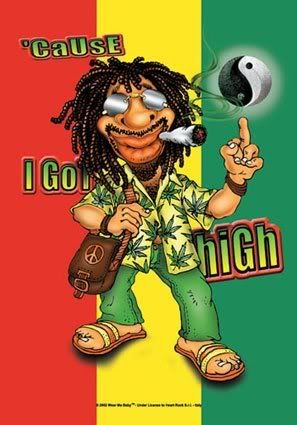
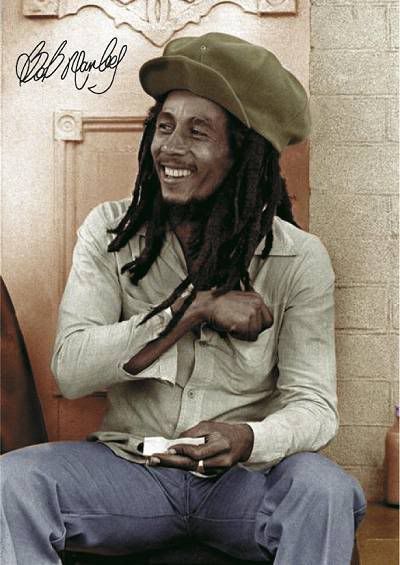
I'm sure everybody already noticed the slowly growing phenomenon of the Rasta underground culture in almost everywhere in the country. The reggae music, the colors of the Ethiopian flag, the dreadlocks and the apparels with printed images of Bob Marley.
In an article written by Von Fritz Evangelista, former ed-chief of the Riverside College (the official publication of the students of Riverside College, Bacolod City), a guy calls himself a Rasta with his dreadlocks and the ganja pendant in his necklace. He says he is discriminated being a Rasta sometimes since people think of him as weird, addict or lost. But he doesn't care and proudly says they are cool.Those words triggers the conclusion that today's generation define Rasta, as synonymous to being 'cool'.
"But is Rastafarianism a bandwagon or more of a religion?" Von asks.
Let's spend some time to understand what Rastafarianism, as it is formally called, is all about.
Tracing a bit of its history through Microsoft Encarta Premium 2007, Rastafarianism is a religious and cultural movement that originated in Jamaica around 1930. The movement was named after Tafari Makonnen, which was the original name of Haile Selassie I, a prince who in 1930 was crowned emperor of Ethiopia. Ras means “Lord” in the Amharic language. Selassie’s other titles included King of Kings, Lord of Lords, and Conquering Lion of the Tribe of Judah.
The central doctrine of Rastafarianism is that Haile Selassie is the God of the black race. This belief continued to be held even after his death in 1975. The Ras Tafari movement is thought to be a strand of the “Back to Africa” movement created by Jamaican leader Marcus Garvey after he moved to the United States and settled in New York City in 1916. Garvey preached black pride and black emancipation, and advocated a return of black Americans to Africa, their ancestral homeland, and particularly to Liberia and Sierra Leone. According to a widely believed report, Garvey told his followers in Jamaica, at his departure for the United States, “Look to Africa where a Black King shall be crowned; he shall be your redeemer.” After the coronation of Haile Selassie, many Garveyites began to search the Bible for confirmation of the prophecy. The confirmation was found in Revelation 19:16, which reads: “And he hath on his vesture and on his thigh a name written, King of Kings, and Lord of Lords.” With these events the Rastafarian movement was born.
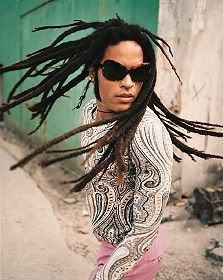
Rastafarianism is a millenarian movement emphasizing the belief that, through the power of a supernatural being, oppressed people will miraculously be led from oppression to a new heaven on Earth where all problems will be solved in peace. To believers, Haile Selassie I is the God with supreme powers; through him they look for an immediate return to Ethiopia—the promised land—and the biblical name for Africa. Rastafarians have developed an elaborate ritual system using marijuana (ganja) as a sacrament, as Christians use bread and wine. They have adopted the law of the biblical Nazarites, which prohibits the cutting of their hair. As a result, many wear their hair in long, matted locks known as dreadlocks. Rastafarians sometimes wear knitted caps of red, gold, green, and black—the colors of the Ethiopian flag, which have symbolic significance for members of the movement. They also observe Hebrew dietary laws, abstaining from certain items in their diet, and eating only those foods considered pure and untainted.
The early Rastafarian movement drew its membership from among the disadvantaged young, the unemployed, and the unemployable, but the revolutionary doctrine of the movement soon began to penetrate the middle class. By the mid-1960s the movement had drawn large numbers of educated young people and professionals. By the early 1980s the movement consisted of two tiers: the Rastafarians of long standing, who came primarily from poverty, and the new, educated Rastafarians.
From Jamaica the Rastafarian movement spread to the United Kingdom, Canada, and the United States, and to other Caribbean islands. The conversion of reggae singer Bob Marley to Rastafarianism in 1967 helped the Rastafarian message become widespread during the 1970s and early 1980s, as Marley and reggae achieved mainstream popularity. After Marley’s death in 1981 other reggae musicians, inspired by the Rastafarian message, also communicated it through their music.
Because of its revolutionary stance the Rastafarian movement was controversial from its emergence. It is unequivocally a black-consciousness movement. The creed itself is generally peaceful, and Rasta has become increasingly accepted by mainstream organizations as a legitimate religious movement. The ritual use of marijuana has contributed to some unfavorable perceptions of the movement, especially in countries where marijuana is illegal.
Today, Rasta is in constant battle with Punk for dominating the underground culture with different fashion, habits and principles. Pinoys, as Von puts it, though not black, associate themselves with the belief not of afrocentrism but self-expression.
For some, Rasta today is purely bandwagon. Many go along with what they think is cool.
My friend Ian Kris Mendez is the former EIC of the College Voice (the official student publication of La Carlota City College) says "it's nonsense. Some of those wannabe Rastas wear shirts with Bob Marley images but they never knew who really Bob Marley was."
Modern bandwagon or an ancient religion? Well, as Von ends his article, what matters most is that we must know the facts behind what we believe in.







 How to tell if a Catholic drives fast.